Biofield Therapy in Cancer Care: Between Supportive Practice and Emerging Science
A reflection on integrative oncology, preclinical research, and the evolving understanding of biofield therapies.
My work sits at the intersection of science and energy — a space that asks for both curiosity and responsibility. Within cancer care, this intersection is already visible, with biofield therapies increasingly recognised as complementary, supportive modalities within integrative oncology.
It’s also a space I hold especially carefully for women and children, where safety, nervous system support, and a sense of being deeply seen and held are foundational to any healing process.
“Not conclusions. Not claims. But potential — and that is where the door begins to open.”
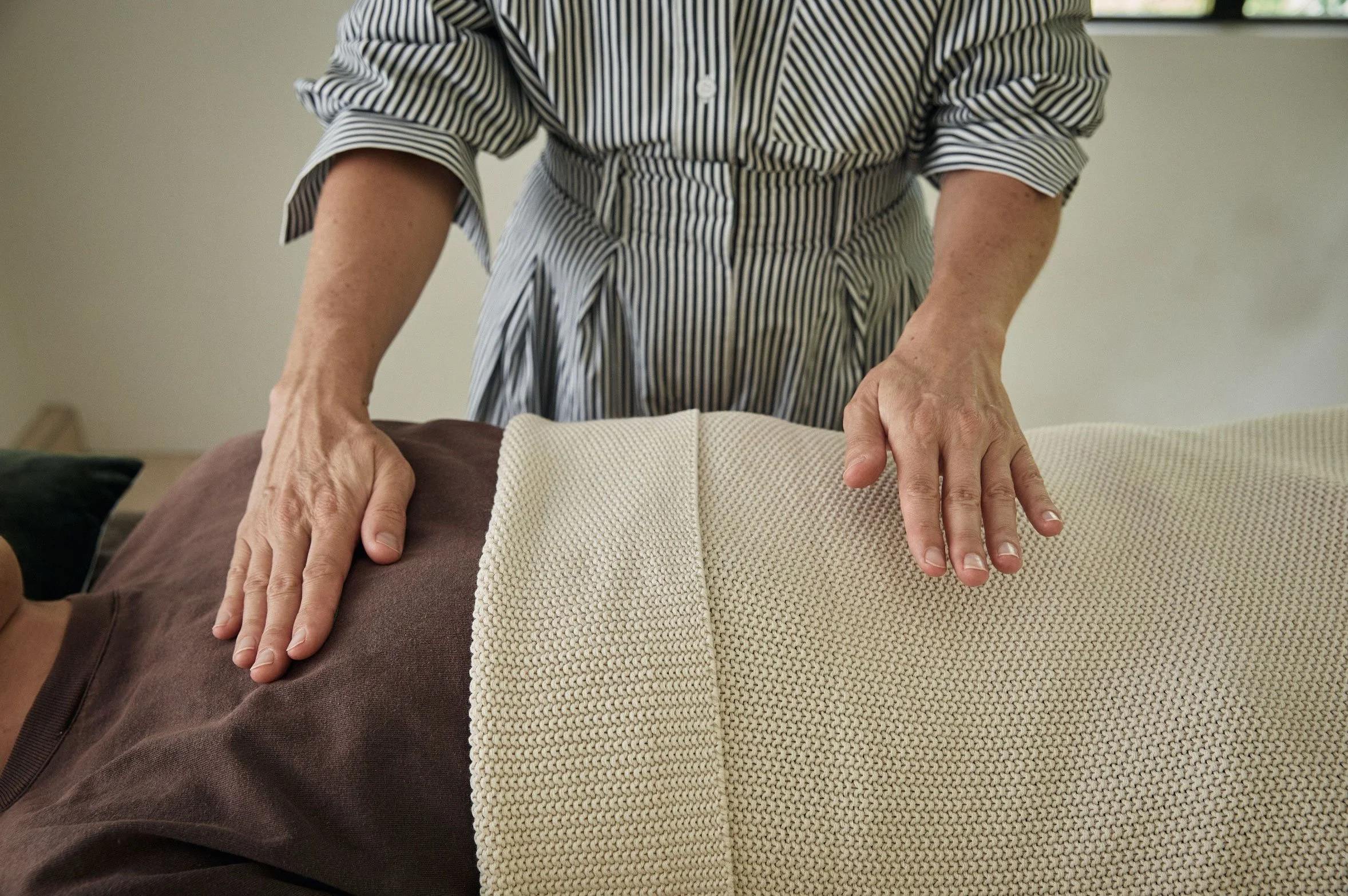
Within oncology, therapies such as Reiki are increasingly recognised as complementary, supportive modalities, particularly for their role in improving patient experience. Systematic reviews and meta-analyses of Reiki and biofield therapies suggest consistent improvements in pain, anxiety, fatigue, and overall quality of life across clinical populations, including those undergoing cancer treatment. Importantly, these outcomes relate to symptom support and wellbeing, rather than direct tumour modification. This aligns with its growing inclusion in integrative oncology settings, where the focus is not on treating disease, but on supporting the person through it (Baldwin et al., 2010; McManus, 2017; Thrane & Cohen, 2014).
For me, this is where biofield therapies firmly sit: complementary, collaborative, and alongside medical care. One does not negate the other.
At the same time, it’s important to be clear: current clinical evidence does not support Reiki and other biofield therapies as a treatment for cancer itself. Its role remains supportive — not curative — and should always sit alongside appropriate medical care. Maintaining this distinction is essential for both clinical integrity and patient safety.
What becomes particularly interesting, however, is how emerging research is beginning to explore this space more deeply. A recent study by Yang et al. (2026), published in Cancer Medicine examined the effects of biofield therapy on pancreatic cancer models. In controlled laboratory conditions, researchers observed reduced cancer cell proliferation (growth and rapid division of cells), decreased invasion (the ability of cancer cells to spread into surrounding tissue), and reduced metastatic burden (spread of cancer to other organs) in mice.
“For me, biofield therapy is complementary, collaborative, and sits alongside medical care — one does not negate the other.”
These changes were accompanied by measurable biological shifts, including downregulation of FOXM1 (a gene that drives cancer growth, cell division, and spread), altered mitochondrial function (changes in how cells produce and use energy), and changes in cellular membrane potential (the electrical charge across the cell membrane, which influences how cells communicate and behave) — all pathways relevant to tumour behaviour.
What stands out in this study is not just the findings, but the design. Multiple experienced biofield practitioners delivered sessions without physical contact, directing focused intention toward cells and animal models. The interventions were conducted at a distance, often with biological samples housed inside incubators and practitioners positioned outside of them. While exact distances were not standardised or consistently reported, the design clearly reflects non-contact, spatially separated delivery.
Importantly, the authors describe the potential for reduced metastasis. Not conclusions. Not claims. But potential — and that is where the door begins to open.
“I don’t believe these perspectives need to compete. I believe they can coexist — and, over time, become more integrated.”
This is important — not as proof of mechanism, but as a point of inquiry. The study suggests that intentional, non-contact interaction may be associated with measurable biological effects under controlled conditions. It does not explain how or why this occurs, nor does it establish clinical relevance in humans. But it does open a door.
For me, these perspectives don’t need to compete. One reflects where the clinical evidence currently stands — biofield therapy as a supportive, integrative practice. The other reflects where scientific inquiry is beginning to look — toward subtle, not yet fully understood interactions between intention, biofield, and biology.
“Grounded in evidence, open to possibility, and anchored in care.”
I don’t believe these ideas need to compete. I believe they can coexist — and, over time, become more integrated. Holding both allows for something more expansive: grounded in evidence, open to possibility, and anchored in care.
And perhaps, we are standing at the edge of a deeper shift — not a departure from medicine, but an expansion of how we understand and support the body in healing.
References:
Baldwin, A. L., Vitale, A., Brownell, E., et al. (2010). The touchstone process: An ongoing critical evaluation of Reiki in the scientific literature. Holistic Nursing Practice, 24(5), 260–276.
McManus, D. E. (2017). Reiki is better than placebo and has broad potential as a complementary health therapy. Journal of Evidence-Based Complementary & Alternative Medicine, 22(4), 1051–1057.
Thrane, S., & Cohen, S. M. (2014). Effect of Reiki therapy on pain and anxiety in adults: An in-depth literature review of randomized trials. Pain Management Nursing, 15(4), 897–908.
Yang, P., Wei, D., Chakraborty, S., et al. (2026). The preclinical effects and mechanisms of biofield therapy on pancreatic cancer cell growth and metastasis. Cancer Medicine, 15(4), e71726. https://doi.org/10.1002/cam4.71726
Explore more Reflections: